Knowledge & Wikis
Part of Asynchronous collaboration
Choosing where a decision should be recorded
Choose an accessible home for a team decision and record its wording, decision maker, reason, start point and follow-up.
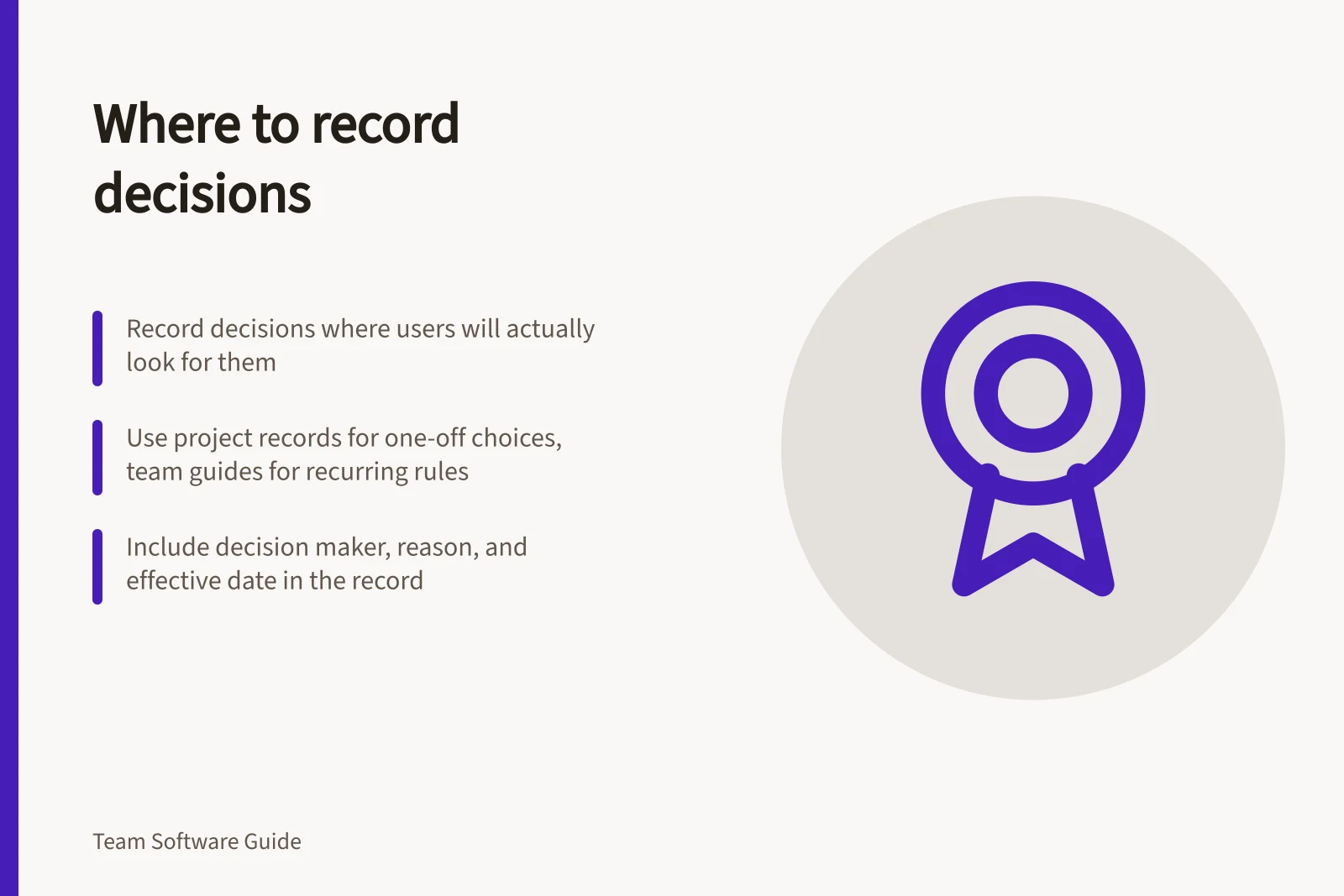
Record a decision where people who must follow it will look for the current rule or project outcome. Chat threads and meeting notes may explain how the choice emerged, but the approved wording needs a maintained, accessible home. Choose that home based on the decision's scope and likely retrieval path.
Start with who will use the decision
Ask who will act on the outcome later, including those absent when it was made. Would they search for a project, process, customer commitment or task? Place the decision with the record they will reasonably use.
A project-specific choice may belong in the project record. A rule used across projects may belong in maintained team guidance. A task system can track work created by a decision, but a task title may not explain the choice and its reason. Choose a location someone owns and the intended audience can reach.
| If the choice affects… | A home to consider | What to check |
|---|---|---|
| One active project | Its project decision area | Can a new contributor find the current choice? |
| A recurring team process | The maintained process page | Who can change the rule and inform affected teams? |
| A deliverable's approved wording | Its approval or release record | Can readers distinguish approved text from a draft? |
The table helps choose a location; it describes no software feature. If the outcome is announced elsewhere, identify which record is authoritative.
Write a record that stands alone
Include the question, chosen option, decision maker, when the choice applies, the main reason and any condition that could reopen it. Mark an unresolved question as open. Do not present people who contributed advice as approvers unless they actually approved the decision.
For example, a record might say: “Use the revised intake form for new requests from the next intake cycle. The operations lead approved the change because the previous form missed the handover contact. Existing requests stay on their current route until closed.” The start point and exception tell a reader which work is affected.
Give follow-up actions their own owners and tracking place. A decision can be settled while its implementation remains open.
Keep the chosen home current
Point announcements and discussions to the maintained record. If the choice changes, update that record and keep enough history to explain work done under the earlier rule. Check that an affected colleague can find and understand the current wording. If not, improve its title, location or access.